
PS5 HDMI Repair: What to Expect
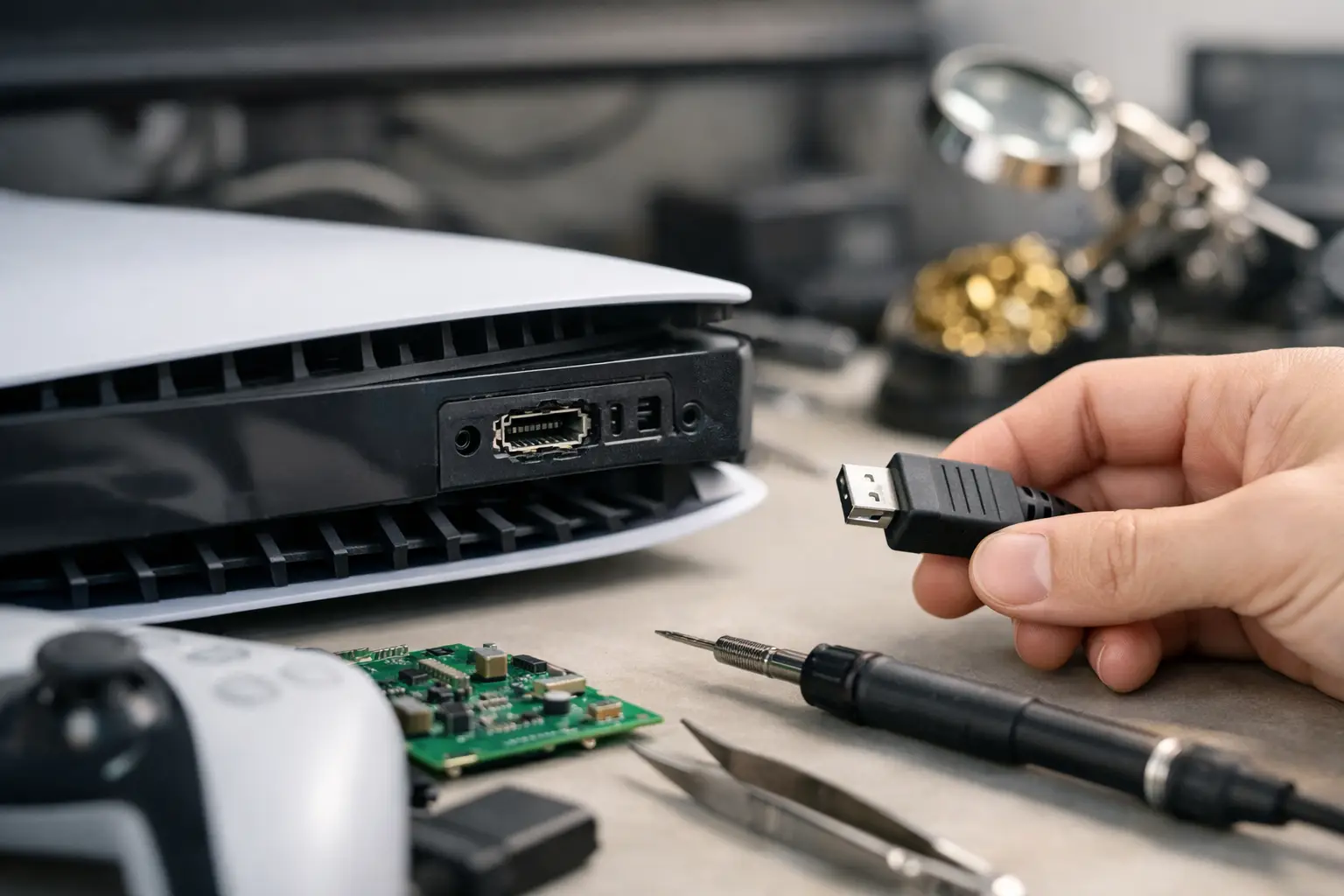
One bad drop, one tight cable yank, or one forced plug is all it takes to turn a working console into a black screen problem. PS5 HDMI repair is one of the most common console issues we see because the port sits in a high-stress spot and takes more wear than most owners realize.
If your PS5 powers on but shows no image, flickers, cuts in and out, or only works when the cable is held at an angle, the HDMI port is a likely failure point. Sometimes the port itself is the problem. Sometimes the damage goes deeper into the board. That difference matters, because a quick visual guess is not the same as a real diagnosis.
PS5 HDMI repair problems usually start with physical damage
The PS5 HDMI port is soldered directly to the motherboard. That means it is not a simple snap-in part. Every time the cable is plugged in, removed, bent, or pulled sideways, stress transfers into the port housing and its soldered anchor points.
The most obvious damage is a bent or crushed port. You might see broken pins inside, a loose housing, or a cable that no longer seats firmly. In those cases, the repair is often a full port replacement. But visible damage is only part of the story.
A PS5 can also have internal HDMI-related damage even when the port looks mostly normal from the outside. A hard impact can crack solder joints, damage pads, or affect nearby components on the board. In more serious cases, the HDMI encoder circuit or surrounding lines may need board-level work. This is where experience matters, because replacing the port alone will not fix every no-display console.
Signs your PS5 may need HDMI port service
A damaged HDMI port does not always fail the same way. Some systems lose video completely. Others still power on, beep, show a white light, and look normal except nothing appears on the TV.
You may also notice intermittent video, static, color distortion, screen flicker, or a picture that drops out with the slightest cable movement. If the HDMI cable feels loose in the port, that is another strong clue. In some cases, customers try multiple TVs and multiple cables before realizing the problem is in the console itself.
There is also the possibility that the issue is not the port. A bad cable, incorrect display setting, damaged TV input, or a deeper motherboard fault can create similar symptoms. That is why a free initial evaluation is useful. It saves time and keeps you from paying for the wrong repair.
What happens during PS5 HDMI repair
A proper repair starts with inspection and testing, not guessing. The console is checked for obvious port damage, pin condition, looseness, and signs of impact. From there, the board may need closer inspection to determine whether the damage is limited to the port or extends beyond it.
If the port is damaged, the old HDMI port is removed with the correct tools and technique. This is delicate work. Too much heat, poor alignment, or rough removal can lift pads or create bigger problems. After removal, the board pads are cleaned and inspected before a new port is installed and soldered into place.
That is only part of the job. The repaired area should then be tested for solid connection, proper alignment, and stable video output. If the console still does not display after port replacement, the issue may involve the HDMI circuit itself, power delivery to that section, filter components, or other board-level faults.
Shops that only swap parts may stop at the port. Shops with micro-soldering and board diagnostic capability can continue deeper when needed. For customers, that difference often means the gap between a real fix and wasted time.
Why DIY PS5 HDMI repair often goes wrong
A lot of people search for a replacement port and assume this is a manageable home repair. The problem is not just soldering skill. It is the combination of hot air technique, board protection, pad preservation, microscope-level inspection, and circuit awareness.
The PS5 motherboard is not forgiving. If the old port is pulled before the solder is properly released, pads can tear. If the new port is slightly misaligned, pins may not connect correctly. If heat is not controlled, nearby components can shift or fail. Even experienced hobbyists can turn a repairable port issue into a more expensive board repair.
There is also a hidden risk with low-quality replacement parts. A poorly made HDMI port may fit badly or fail early. Good repair work depends on both technique and part quality.
That does not mean every HDMI issue is complicated, but it does mean the repair should match the level of the hardware. For a console like the PS5, in-store work by a shop that handles board-level repairs is usually the safer route.
How long PS5 HDMI repair takes
Turnaround depends on the type of damage. A straightforward port replacement may be completed faster than a board-level repair that needs deeper testing and component work. Parts availability, queue volume, and whether previous repair attempts caused additional damage can also affect timing.
Customers often want an exact same-day promise, but the honest answer is that it depends on what the evaluation shows. A shop that rushes without proper testing may miss a secondary fault. A shop that diagnoses carefully is more likely to fix it right the first time.
For local customers in El Paso, that is one reason in-store service matters. Walk-ins are welcome, and all services are performed in-store, which helps keep communication clear and the process accountable.
What affects the cost of PS5 HDMI repair
Cost usually comes down to the scope of damage. If the HDMI port is physically broken and the board underneath is intact, pricing is more predictable. If the port damage also affected pads, traces, filters, or HDMI-related chips, labor and complexity increase.
Previous failed repair attempts can raise the cost too. Once pads are lifted, solder bridges are created, or missing components enter the picture, the repair becomes more involved. That is why it is often cheaper to get the right diagnosis first instead of trying multiple partial fixes.
A fair repair quote should reflect what the console actually needs, not a blanket guess. Honest service means separating a simple port replacement from a deeper motherboard issue and explaining the difference clearly.
When a PS5 HDMI repair is worth it
In most cases, repairing the HDMI issue is worth it. The PS5 is still a high-value console, and HDMI damage is usually localized compared to broader system failure. If the rest of the console is in good shape, replacing the port or repairing the HDMI circuit is often much more practical than replacing the whole unit.
There are exceptions. If the console has heavy liquid damage, multiple board issues, or severe previous repair damage, the economics can change. That is why a real evaluation matters. Good repair advice is not about pushing every job through. It is about telling the customer what makes sense.
Choosing a shop for PS5 HDMI repair
Not every repair shop handles console board work at the same level. Some can replace screens and batteries all day but do not perform advanced micro-soldering. For PS5 HDMI repair, ask whether the work is done in-house, whether the shop performs motherboard-level diagnostics, and whether they can handle more than a simple port swap if the issue goes deeper.
That matters because HDMI problems can be layered. A customer may come in expecting a broken port, but the real failure could include torn pads, damaged filters, or a fault in the signal path. A capable shop should be able to identify that before promising a result.
At EPElectrocenter, this kind of repair fits the work we do every day - in-store diagnostics, board-level electronics repair, and straightforward service without inflated claims. If your PS5 is showing no image or acting like the HDMI connection is failing, bringing it in for a free initial evaluation is the fastest way to stop guessing.
A PS5 with a bad HDMI connection is frustrating, but it is usually fixable. The best next step is simple: get the console checked before more cable wiggling, home repair attempts, or forced connections turn a clean repair into a bigger one.