
Micro Soldering Repair El Paso: What to Know
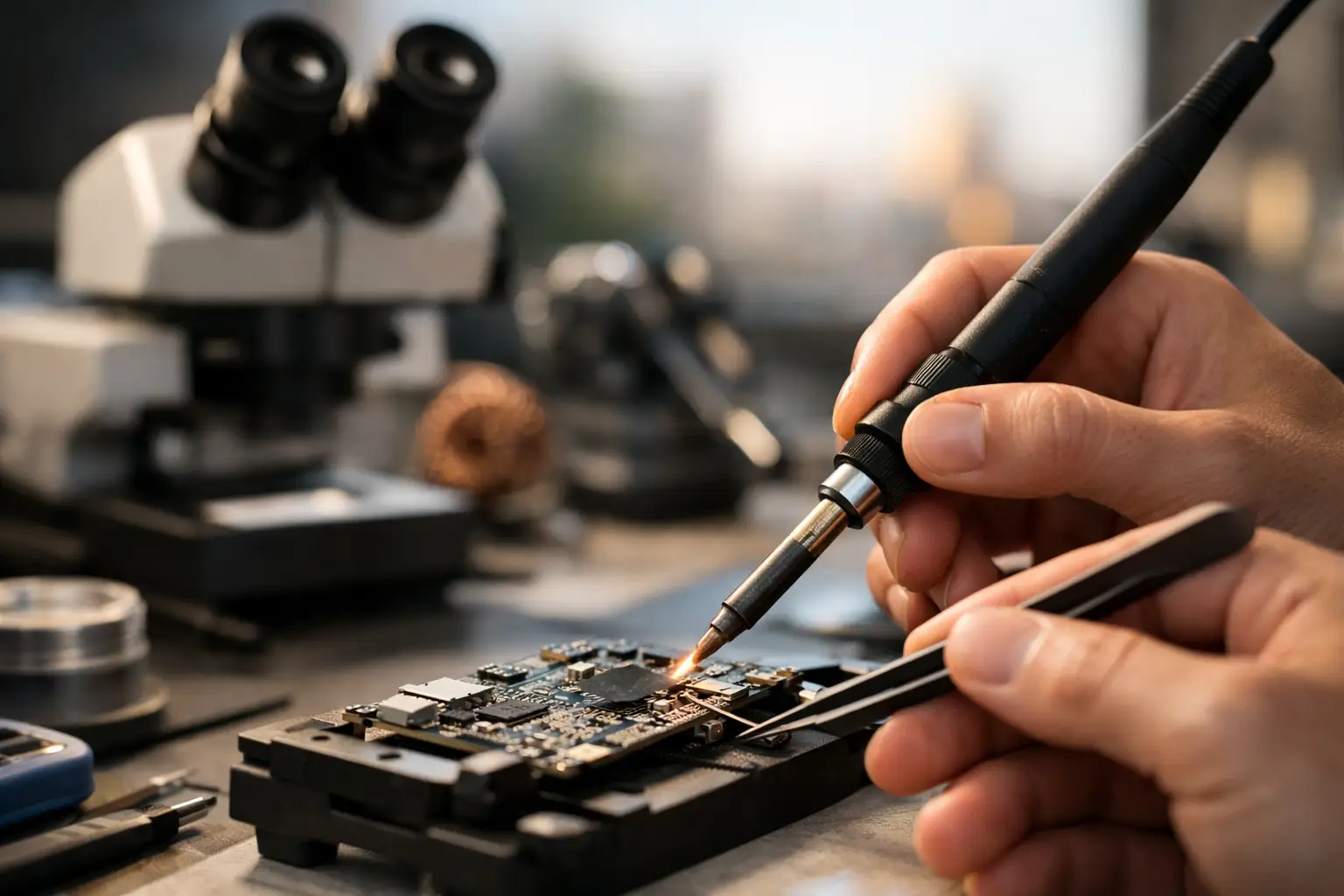
A phone that will not charge even after a new port, a laptop with no power after a spill, a game console with a dead HDMI circuit - these are the kinds of problems where micro soldering repair El Paso customers ask for is often the difference between saving a device and replacing it too soon.
Most repair shops handle parts swaps. Fewer shops handle board-level work. That gap matters because many failures are not caused by a cracked screen, worn battery, or bad outer port alone. The real issue can sit on the motherboard in the form of a damaged connector, failed charging IC, shorted capacitor, lifted pad, or broken trace. When that happens, replacing the obvious part does not solve much.
What micro soldering repair in El Paso actually means
Micro soldering is precision repair performed directly on a device's logic board or motherboard. It involves working under magnification with specialized tools to remove and replace tiny components, rebuild damaged connections, and trace faults at the circuit level.
This is not the same as standard solder work on larger parts. On modern phones, tablets, laptops, and consoles, the components are small, densely packed, and sensitive to heat. A careless attempt can turn a repairable board into a replacement job. That is why board-level diagnostics matter just as much as the soldering itself.
A proper micro soldering process usually starts with testing, not with heat. A technician checks power rails, looks for shorts, measures voltage behavior, inspects for corrosion, and confirms which component has actually failed. That step saves time, money, and unnecessary part replacement.
When micro soldering repair El Paso customers need makes sense
Not every device needs motherboard work. If a battery is swollen or a screen is broken, a standard repair may be enough. But there are common situations where micro soldering is the right path.
Charging issues are a big one. Sometimes the port is loose or physically broken. Other times the port is fine, but the charging circuit on the board has failed. A customer may already have tried a cable, charger, and even a port replacement somewhere else, yet the device still will not take power. That points to a deeper issue.
Liquid damage is another major case. Water and other liquids do not just cause immediate shutdowns. Corrosion can continue eating away at pads, filters, connectors, and ICs even after the device dries out. Quick cleaning helps, but many liquid-damaged devices also need component replacement and board repair to become stable again.
Dropped devices can also need this level of work. A hard impact may crack solder joints under a connector, tear a pad from the board, or damage the HDMI, USB-C, or FPC connection area. On laptops and consoles, repeated stress on ports often leads to detached anchors or broken traces that only board repair can fix.
Then there are the no-power and no-boot cases. A laptop that shows no charging light, a tablet stuck in a boot loop, or a console with no display output may all have board faults. It depends on the model and the symptoms, but these are the cases where real diagnostics separate guesswork from a repair plan.
Devices that often need board-level work
Phones are a common candidate because they pack a lot of circuitry into a very small space. Charging circuits, backlight circuits, face ID or camera connectors, and audio IC-related issues can all require precision work.
Tablets and iPads often come in for charging port area damage, touch faults, and power issues. On some models, the charging port itself may be soldered or tied to surrounding circuitry that has to be rebuilt carefully.
Laptops and MacBooks are another category where micro soldering is often worth considering. These devices are expensive, store important data, and often fail from liquid damage, charging problems, blown power rails, or damaged USB-C circuitry. In many cases, repairing the board is far more practical than replacing the entire machine.
Gaming consoles also show up with board-level issues. HDMI port damage is common, but the visible port is not always the only problem. Impact can damage the surrounding circuit, filters, or retimer components. Replacing the port without checking the board can leave the customer with the same problem.
Why diagnosis matters more than the obvious symptom
A dead device does not tell you what failed. It only tells you the end result.
That is where many repairs go sideways. Someone sees a phone that is not charging and assumes it needs a port. Someone sees a laptop that got wet and assumes it is beyond repair. Someone sees a console with no picture and assumes the HDMI port is the whole story. Sometimes those guesses are right. A lot of the time, they are incomplete.
Good board-level repair starts by narrowing down the fault. Is there a short on the main power line? Is a charging IC failing under load? Is corrosion interrupting communication between circuits? Is the connector damaged, or is the problem under the connector? Those questions matter because the wrong first move can waste both time and money.
At EPElectrocenter, all services are performed in-store, which matters for customers who want local accountability and a clear answer on what their device actually needs. A free initial evaluation gives you a starting point before committing to major work.
The trade-offs: repair vs. replacement
Micro soldering is highly effective, but it is not magic. Some boards are too badly damaged. Some devices have multiple failures, and one repaired issue can uncover another. Some repairs are worthwhile because the device is expensive or contains important data. Others may not make financial sense if the unit is older and replacement cost is low.
That is why honest repair shops talk through the trade-offs. If a board repair is likely to restore a MacBook that would cost far more to replace, the value is obvious. If an older low-cost device needs extensive board reconstruction, the answer may be different. It depends on the device, the extent of damage, the parts involved, and whether data recovery is a priority.
For business customers, downtime can matter more than the device itself. A board repair that gets a workstation, point-of-sale system, or office laptop back online quickly may be the better decision even if the fault is complex.
What to expect from a capable local shop
If you are looking for micro soldering repair in El Paso, the first thing to ask is whether the shop actually performs board-level work in-house. That matters because outsourced repairs usually mean more delay, less direct communication, and less visibility into what is being done.
You should also expect a shop to explain the problem in plain language. Not every customer wants voltage readings and chip names, but every customer deserves a clear explanation of what failed, what the repair involves, and what the realistic outcome looks like.
Turnaround time will vary by issue. Some jobs are straightforward once diagnosed. Others take longer because fault tracing is part of the work. The right shop will be upfront about that. Fast service is valuable, but fast guesswork is not.
It also helps when walk-ins are welcome. For many customers, especially students, professionals, and parents juggling a full day, being able to bring a device in without a complicated process makes a real difference.
How to improve the odds after damage happens
If a device has liquid damage, power it off and stop charging it. The longer power runs through corroded areas, the more damage can spread. Drying it out on a counter does not remove residue or repair shorted components.
If a port feels loose or a cable only works at one angle, stop forcing it. Repeated use can tear pads and traces, turning a simpler repair into a harder one.
If another shop already replaced a common part and the issue remains, that is usually the time to ask about board-level diagnostics instead of repeating the same kind of repair.
The main thing is not to assume a device is done for because the problem is advanced. A lot of electronics that look dead are still repairable with the right tools, the right diagnosis, and the patience to work at the board level. When the device matters, the best next step is simple: get it checked by a local shop that does the work in-house and gives you a straight answer before moving forward.