
Independent Repair Versus Manufacturer Service
A cracked screen is simple until you need your phone for work that afternoon. A laptop that will not charge is manageable until the files on it are the only copy. Independent repair versus manufacturer service is not just a question of price. It affects turnaround time, warranty coverage, data access, repair options, and whether anyone will diagnose the actual fault instead of recommending a full replacement.
For El Paso customers, the right choice depends on the device, the damage, and what matters most right now. Manufacturer service can be the cleanest route for a device under warranty. An independent shop can be the more practical answer when you need a fast diagnosis, a repair the manufacturer does not offer, or clear options before spending money.
When Manufacturer Service Makes Sense
Manufacturer service is often the strongest option for a newer device with active factory warranty coverage, extended protection, or an eligible recall. If a phone has a confirmed manufacturing defect, a covered MacBook issue, or a console is still within its service period, going through the manufacturer may protect you from paying for work that should be covered.
It can also be the better fit when a repair requires proprietary calibration, security pairing, or a replacement program that only the manufacturer can provide. Some newer devices tie specific components to the system software. A manufacturer or authorized provider may have access to diagnostic tools, serialized parts, and post-repair configuration processes that are not available everywhere.
That said, warranty service is not automatically fast or free. Physical damage, liquid exposure, worn batteries, and accidental damage may fall outside standard coverage. Many manufacturers require mail-in service, an appointment at a distant location, or several business days without the device. They may also replace an entire unit or major assembly when a smaller component-level repair could solve the problem.
Before handing over a device, ask what is covered, how long the process will take, whether data could be erased, and whether the proposed service is repair or replacement. Those answers matter more than a warranty label alone.
Independent Repair Versus Manufacturer Service: The Real Differences
The most noticeable difference is usually the repair approach. Manufacturer service tends to follow standardized service paths. If a charging circuit, HDMI port, or small board component fails, the approved answer may be replacement of the full device or motherboard. That process is predictable, but it can be expensive and may not preserve data stored on the original board.
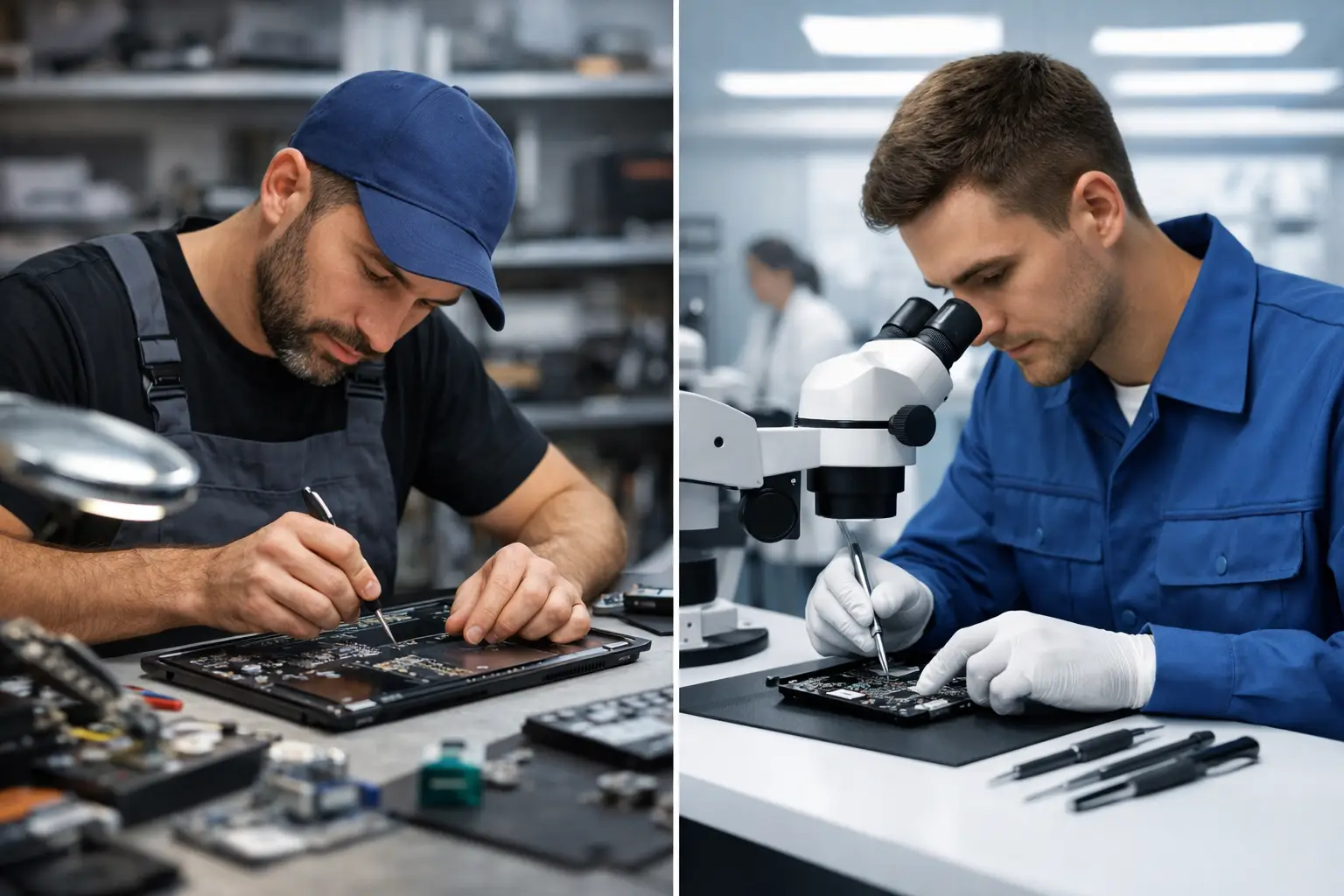
An experienced independent repair shop can inspect the actual failure and offer repair options based on what the device needs. For example, a laptop that does not power on may have a bad charging port, a damaged USB-C controller, a shorted capacitor, battery communication issue, or motherboard power fault. These are different problems with very different repair costs. A proper diagnosis prevents paying for parts that will not fix the device.
Independent shops can also be more flexible with timing. A screen, battery, charging port, storage upgrade, operating system install, or game console HDMI repair may be completed much sooner than a manufacturer mail-in process, depending on part availability and device condition. Walk-in access and a free initial evaluation are especially useful when you need an answer before committing to a repair.
Cost is another factor, but it should not be the only one. Independent repair is often less expensive because the shop can repair a specific part or board-level fault rather than replacing a complete assembly. Still, the lowest quote is not always the best value. Ask what part quality will be used, whether the repair includes a workmanship warranty, and whether the technician will test the device fully after the repair.
Board-Level Repair Can Change the Decision
Many repair decisions come down to whether the shop can work beyond modular parts. Replacing a screen or battery is common. Finding a short on a motherboard, replacing an integrated circuit, rebuilding a damaged pad, or restoring a failed power rail requires different equipment and experience.
This matters most after liquid damage, a power surge, a failed charging port, physical impact, or an attempted repair that did not solve the issue. A manufacturer may classify the device as non-repairable or quote a full board replacement. A basic repair counter may decline the job. Board-level diagnostics can identify whether the original board can be repaired and whether the data has a realistic path to recovery.
That does not mean every board should be repaired. Severe corrosion, multiple damaged layers, unavailable components, or a repair cost close to replacement value can make replacement the smarter choice. A trustworthy technician should explain those limits clearly instead of promising a result before the device has been evaluated.
At EPElectrocenter, all services are performed in-store, including advanced motherboard-level diagnostics and micro-soldering work. That gives customers a direct place to ask questions about the fault, the repair path, and the expected cost before approving work.
Parts, Quality, and What to Ask Before Approving a Repair
Parts are not all equal. With screens, batteries, charging assemblies, and replacement ports, quality can affect brightness, touch response, battery life, fit, durability, and device messages after installation. Manufacturer parts may be the appropriate choice for some repairs, while a high-quality aftermarket option may make better financial sense for an older device.
The key is transparency. A repair provider should tell you whether a part is original, OEM-quality, aftermarket, refurbished, or pulled from another device. They should also explain any trade-offs. For instance, certain phone repairs can affect water resistance, biometric features, display warnings, or calibration behavior. Those issues should be discussed before the repair, not discovered at pickup.
Ask a few direct questions: What is causing the problem? Is the quote for diagnosis only, a component repair, or a full replacement? What type of part will be installed? Will the repair affect my data, warranty, or device features? What happens if testing finds additional damage?
Clear answers are a good sign. Vague language, pressure to replace a device immediately, or a quote without a diagnosis are reasons to slow down.
Data Is Often More Valuable Than the Device
If your laptop will not boot or your phone has liquid damage, your first concern may be photos, business files, schoolwork, or customer records. Manufacturer service frequently prioritizes device replacement and may require an erase. That can be reasonable for warranty processing, but it is not the right route when the original data is the priority.
An independent technician may be able to diagnose the device without replacing the motherboard, repair the board long enough to access data, or remove and recover storage when the hardware allows it. Modern encryption means data recovery is not guaranteed, especially if the original board or security components are damaged. Still, preserving the original hardware usually creates more recovery options than immediately swapping the device.
Tell the technician at check-in if data matters. Do not authorize a reset, replacement, or motherboard swap until you understand what it could mean for your files. If the device still turns on, back it up before any repair whenever possible.
Choosing the Right Service for Your Situation
Choose manufacturer service when you have valid coverage, a known factory issue, or a device that needs a proprietary service process. Choose independent repair when speed, a clear diagnosis, board-level capability, data preservation, or a repair outside warranty matters more.
For small businesses, the calculation is often about downtime. A desktop that runs point-of-sale software, a laptop used for estimates, or a phone assigned to a field employee does not need a generic service path. It needs an honest assessment, a repair timeline, and a practical backup plan. Independent local service can make that conversation easier because you are dealing directly with the people working on the device.
Do not wait for a small issue to become a complete failure. A loose charging port, intermittent HDMI signal, swollen battery, random shutdown, or liquid-damaged keyboard can worsen with continued use. Bring the device in while there is still a chance to repair the fault, protect the data, and get back to normal without replacing more than necessary.